The New Standard for Infectious Disease Vaccines
The New Standard for Infectious Disease Vaccines

Circular RNA vs mRNA: What’s the Difference?
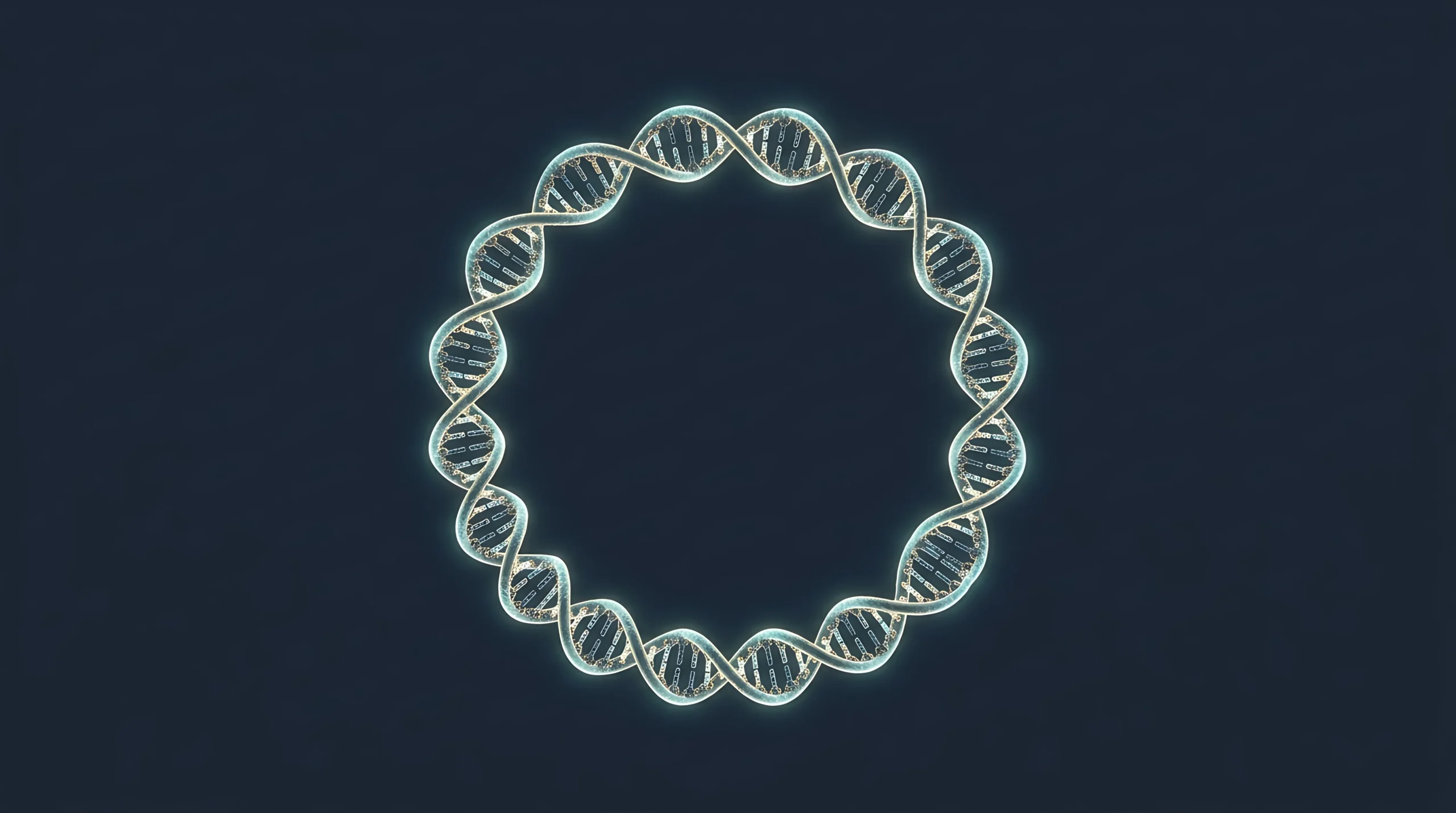
Circular RNA vs mRNA is a comparison between two RNA-based technologies that can deliver genetic instructions for cells to produce proteins. The biggest difference is their molecular structure.
Conventional messenger RNA, or mRNA, is a linear RNA molecule that typically contains a 5′ cap and 3′ poly(A) tail. Circular RNA, or circRNA, is a covalently closed RNA molecule with no free 5′ or 3′ ends. This structural difference can make circRNA more resistant to certain exonuclease-mediated degradation and may support longer-lasting protein expression in some experimental systems.
However, circRNA is not simply a more stable form of mRNA. The two platforms use different translation mechanisms, have different manufacturing requirements, and are at different stages of clinical development. Conventional mRNA has extensive human clinical experience, while circRNA vaccine development remains predominantly preclinical.
What Is mRNA?
Messenger RNA, or mRNA, is a type of RNA that carries genetic instructions used by cells to produce proteins.
For therapeutic applications, researchers can design synthetic mRNA to encode a specific protein. In an mRNA vaccine, for example, the RNA can provide instructions for cells to produce an antigen that stimulates an immune response.
Conventional therapeutic mRNA generally contains several important components:
- 5′ cap
- 5′ untranslated region (UTR)
- protein-coding sequence
- 3′ untranslated region
- poly(A) tail
These components help support RNA stability, cellular recognition, and translation.
The success of mRNA COVID-19 vaccines demonstrated that this technology can move from laboratory research to large-scale clinical use. It also accelerated research into newer RNA platforms, including circular RNA.
What Is Circular RNA?
Circular RNA is a single-stranded RNA molecule whose ends are joined through covalent bonds, creating a closed-loop structure.
Unlike conventional linear mRNA, circRNA does not have free 5′ or 3′ ends. Many naturally occurring circRNAs are generated through a process called back-splicing, while engineered circRNAs can be designed for specific research and therapeutic applications.
If you want to understand the underlying molecule before comparing the two technologies, it helps to start with what circular RNA is and how its closed structure differs from conventional linear RNA.
The closed structure is important because it can make circRNA resistant to certain exonucleases that normally act on the ends of linear RNA molecules.
CircRNA also lacks the conventional 5′ cap and 3′ poly(A) tail found in typical mRNA constructs. As a result, engineered circRNA generally requires a cap-independent translation mechanism to produce protein.
Circular RNA vs mRNA: Key Differences
| Feature | Linear mRNA | Circular RNA |
| Basic structure | Linear RNA | Covalently closed RNA loop |
| Free RNA ends | Has 5′ and 3′ ends | No free 5′ or 3′ ends |
| 5′ cap | Typically present | Absent |
| Poly(A) tail | Typically present | Absent |
| Translation | Usually cap-dependent | Generally cap-independent |
| Translation elements | 5′ cap and associated machinery | Often IRES or other cap-independent elements |
| Degradation | More susceptible to some exonuclease pathways | More resistant to certain exonucleases |
| Protein expression | Generally transient | May be more prolonged |
| Manufacturing maturity | Highly established | Still being optimized |
| Clinical maturity | Multiple approved applications | Predominantly preclinical for vaccines |
| COVID-19 vaccine experience | Extensive human experience | Mainly experimental |
The differences in this table describe the general characteristics of the platforms. Actual performance depends on RNA sequence, design, purification, formulation, delivery system, dose, and other factors.
1. Molecular Structure
The most fundamental difference in circular RNA vs mRNA is structure.
Conventional mRNA is linear. Its structure includes defined 5′ and 3′ ends, with the 5′ cap and poly(A) tail playing important roles in RNA stability and translation.
CircRNA forms a closed loop through covalent bonding between its ends. Because there are no free 5′ and 3′ ends, the molecule interacts differently with cellular RNA degradation pathways.
This closed structure is one of the main reasons circRNA has attracted attention as a potential next-generation RNA platform.
2. Stability
Stability is one of the most discussed differences between circRNA and linear mRNA.
Many degradation pathways act on the ends of linear RNA molecules. The closed structure of circRNA removes these free ends, giving the molecule greater resistance to certain exonucleases.
Studies have reported longer persistence for circRNA than comparable linear RNA in some experimental systems. However, overall stability depends on more than topology. RNA sequence, purification, formulation, delivery system, temperature, and storage conditions can all affect stability.
Therefore, it is more accurate to say that circRNA can offer increased stability under certain conditions rather than claiming that every circRNA product is inherently more stable than every mRNA product.
3. Protein Expression
Both mRNA and circRNA can encode proteins.
The major difference is how the cellular translation machinery begins reading the RNA.
Conventional mRNA typically uses its 5′ cap to recruit the machinery required for translation.
CircRNA does not have a free 5′ end or a conventional 5′ cap. Engineered circRNA therefore commonly uses cap-independent translation mechanisms, including internal ribosome entry sites, or IRESs. Other mechanisms, including m6A-associated translation initiation, are also being investigated.
The specific translation mechanism and RNA design can strongly influence how much protein a circRNA produces.
4. Duration of Protein Production
Linear mRNA is designed to provide temporary instructions. After entering cells, it can produce protein before being broken down through normal cellular RNA degradation pathways.
CircRNA can persist longer in cells under certain conditions because its closed structure protects it from some forms of degradation.
Preclinical studies have reported prolonged protein or antigen expression from circRNA compared with certain linear mRNA constructs.
For vaccine development, longer antigen expression is potentially useful because it may provide additional time for the immune system to encounter the encoded antigen.
However, prolonged RNA or antigen expression does not automatically mean stronger or longer-lasting immunity. Immune responses also depend on antigen design, dose, delivery, formulation, innate immune signaling, and other biological factors.
5. Translation Mechanism
Translation is another major difference between the two platforms.
mRNA
Conventional mRNA generally follows a cap-dependent translation process:
5′ cap → ribosome recruitment → translation
The cap and surrounding RNA elements help the cellular translation machinery recognize and process the RNA.
Circular RNA
CircRNA lacks a conventional 5′ cap.
As a result, engineered circRNA commonly uses an IRES or another cap-independent translation mechanism to initiate protein production. Researchers are actively investigating how different IRES sequences, RNA structures, and other translation elements affect circRNA performance.
This creates both an opportunity and a challenge. CircRNA does not need the same cap-dependent architecture as conventional mRNA, but efficient translation requires careful construct design.
6. Manufacturing
Linear mRNA manufacturing has become a relatively mature process following years of research and the large-scale development of mRNA vaccines.
A typical process can involve:
- DNA template preparation
- In vitro transcription
- RNA optimization
- Purification
- Formulation
- Quality control
CircRNA production involves additional considerations.
Researchers first produce a suitable linear RNA precursor and then use a circularization process to create the closed RNA molecule. The resulting product must be purified and characterized to control unwanted linear RNA, incomplete products, and other impurities.
Quality control is therefore an important area of circRNA development. Researchers need to confirm factors such as circularization efficiency, RNA identity, purity, topology, and translation activity.
7. Delivery
Both mRNA and circRNA can be delivered using lipid nanoparticles and other delivery technologies.
RNA delivery is important because the molecule needs to reach the appropriate cells while remaining sufficiently intact to produce the desired protein.
Lipid nanoparticles have played a major role in the development of mRNA vaccines and are also being investigated for circRNA delivery.
This means that the properties of the RNA molecule should not be considered separately from its formulation. A circRNA molecule may have high intrinsic stability, but effective delivery still depends on the complete delivery system.
Circular RNA vs mRNA COVID-19 Vaccines
The COVID-19 pandemic provided the strongest real-world demonstration of conventional mRNA vaccine technology.
COVID-19 mRNA vaccines became the first widely deployed vaccines based on an mRNA platform, demonstrating that linear mRNA could be manufactured at scale and used to generate protective immune responses in humans.
Researchers subsequently began investigating circRNA vaccines for SARS-CoV-2.
Preclinical studies have tested circRNA constructs encoding SARS-CoV-2 antigens and reported sustained antigen expression and immune responses in animal models. These findings helped establish circRNA as a potential next-generation vaccine platform.
However, the evidence base is not equivalent between the two technologies.
When comparing circular RNA vs mRNA COVID applications, conventional mRNA has extensive human clinical and post-authorization experience, while circRNA vaccine development remains predominantly preclinical.
Why Researchers Are Studying CircRNA for COVID-19
Researchers are investigating circRNA for several potential reasons:
- Greater resistance to certain degradation pathways
- Potentially prolonged antigen expression
- Cap-independent translation
- Potential dose-efficiency advantages
- Potential stability advantages in certain formulations
- Compatibility with established RNA delivery technologies
Some experimental circRNA vaccines have shown encouraging stability and immune responses. However, preclinical results should not be interpreted as proof that circRNA vaccines are clinically superior to conventional mRNA vaccines.
What About “Circular mRNA”?
The term circular mRNA is sometimes used informally when discussing circular RNA technologies.
Scientifically, however, circular RNA and conventional mRNA are distinct molecular formats.
Conventional mRNA is a linear molecule that typically contains a 5′ cap and 3′ poly(A) tail.
Engineered circRNA is a covalently closed RNA molecule that lacks these free ends and generally uses cap-independent translation mechanisms.
For scientific and technical content, circular RNA (circRNA) is usually the clearer term.
The phrase “circular mRNA” may appear in discussions of circular RNA translation because circRNA can encode proteins in a way that resembles the functional role of mRNA. But structurally, circRNA is not conventional linear mRNA.
Advantages of Circular RNA
Researchers are studying circRNA because its molecular architecture may provide several potential benefits.
Greater resistance to certain degradation pathways
The closed-loop structure can reduce susceptibility to some exonuclease-mediated degradation.
Potentially prolonged protein expression
CircRNA can support longer-lasting protein production in certain experimental systems compared with comparable linear RNA constructs.
Cap-independent translation
CircRNA can use IRES-based and other cap-independent mechanisms, creating additional opportunities for RNA engineering.
Potential dose efficiency
If prolonged expression allows the desired protein level to be achieved with less RNA, circRNA could potentially support dose-efficient applications. This remains an area of active research rather than an established clinical advantage.
Potential stability advantages
Selected experimental circRNA formulations have demonstrated encouraging stability under certain storage conditions. However, storage performance depends on the complete formulation and should not be attributed to circular topology alone.
Limitations of Circular RNA
CircRNA also has important limitations that researchers are working to address.
Translation efficiency
CircRNA translation depends heavily on the selected translation initiation mechanism, RNA sequence, secondary structure, and construct design.
Manufacturing complexity
Circularization and purification create additional manufacturing and quality-control challenges.
Purity and quality control
Unwanted linear precursors, incomplete products, and other RNA impurities need to be controlled because they can affect product quality and biological activity.
Delivery
CircRNA still needs an effective delivery system to reach the appropriate cells and tissues.
Limited human data
This remains one of the most important differences between the platforms. Conventional mRNA has substantial human clinical experience, while circRNA vaccine development is still largely preclinical.
Is Circular RNA Better Than mRNA?
There is no single answer.
CircRNA has characteristics that make it an attractive research platform, particularly its closed-loop structure, resistance to certain degradation pathways, and potential for prolonged protein expression.
Conventional mRNA, however, has major advantages in clinical maturity, manufacturing experience, regulatory precedent, and human safety and efficacy data.
Direct comparisons can also be difficult because studies may use different RNA sequences, translation elements, purification methods, doses, lipid formulations, and experimental models.
Therefore, the more useful question is not simply whether circRNA is “better” than mRNA. The important question is which RNA architecture is best suited to a specific vaccine or therapeutic application.
Circular RNA Research in Cancer
CircRNA research extends beyond infectious disease vaccines.
Scientists are studying circular RNAs in cancer because naturally occurring circRNAs can interact with microRNAs, RNA-binding proteins, and other cellular pathways. Some circRNAs have been investigated in connection with tumor growth, cell signaling, metastasis, drug resistance, and cancer biomarkers.
Engineered circRNA is also being investigated as a potential platform for cancer vaccines and other therapeutic applications. Research remains active, and many proposed cancer applications are still at the experimental or preclinical stage.
This broader research landscape shows why circRNA is attracting interest across both infectious disease and oncology research.
How Vaxxirna Is Exploring Circular RNA
Vaxxirna is developing infectious disease vaccines around its proprietary viRNA™ circular RNA platform.
The company’s platform focuses on circular RNA vaccine technology and combines RNA design with formulation and delivery approaches intended to support sustained immune protection.
Vaxxirna describes its approach around three key areas:
- Circular RNA technology
- Thermostable lipid nanoparticle formulation
- Microneedle-array patch delivery
The company is developing this approach for infectious disease applications and is advancing multiple vaccine programs.
You can learn more about the company’s programs and development priorities through its vaccine pipeline.
For company updates, partnerships, and other business information, the investor relations section provides a separate resource for investors and other stakeholders.
Circular RNA vs mRNA: Which Technology Has More Potential?
Both technologies have important roles in RNA biotechnology.
mRNA has already demonstrated that an RNA-based platform can move from laboratory research to large-scale human use. Its manufacturing infrastructure, regulatory experience, and clinical evidence provide an established foundation.
CircRNA represents a newer direction in RNA technology. Its closed-loop structure and potential for prolonged protein expression make it particularly interesting for researchers investigating next-generation vaccines and therapeutic protein expression.
The future of circRNA will depend on whether researchers can consistently translate these molecular characteristics into meaningful advantages in areas such as:
- Protein expression
- Dose efficiency
- Stability
- Manufacturing
- Purification
- Delivery
- Safety
- Immune response
- Clinical outcomes
For now, circRNA is best understood as an emerging RNA platform, not simply a replacement for conventional mRNA.
FAQs About Circular RNA vs mRNA
Is circular RNA the same as mRNA?
No. Both are RNA molecules that can encode proteins, but conventional mRNA is linear while circRNA is a covalently closed RNA molecule. Their structures also lead to different translation mechanisms.
Is circular RNA more stable than mRNA?
CircRNA can be more resistant to certain exonucleases because it does not have free RNA ends. However, overall stability depends on RNA design, formulation, purification, delivery, and storage conditions.
Is circular RNA better than mRNA for vaccines?
Not necessarily. CircRNA has promising characteristics, including potential for prolonged expression, but its vaccine evidence base is still largely preclinical. Conventional mRNA has much greater human clinical and manufacturing experience.
What is the difference between circular RNA and mRNA in COVID-19 vaccines?
COVID-19 mRNA vaccines use linear mRNA and have extensive human clinical experience. Circular RNA COVID-19 vaccine candidates are being investigated primarily in preclinical research and may offer potential advantages such as prolonged antigen expression and increased molecular stability.
What is circular mRNA?
“Circular mRNA” is sometimes used informally to describe circular RNA designed for protein expression. The more precise scientific term is circular RNA (circRNA) because its molecular structure differs from conventional linear mRNA.
Does circRNA need a 5′ cap?
No. CircRNA has no free 5′ end and therefore does not use the conventional cap-dependent translation mechanism. Engineered circRNA commonly uses cap-independent translation elements such as an IRES.
Is circRNA currently used in approved vaccines?
CircRNA vaccine platforms have not reached the clinical maturity of conventional mRNA vaccines. Current circRNA vaccine research remains predominantly preclinical.
Why are researchers interested in circular RNAs in cancer?
Researchers are investigating circRNAs because they can interact with microRNAs, proteins, and cellular regulatory pathways. Their potential applications include biomarker research, cancer biology, and experimental therapeutic and vaccine approaches.
Conclusion
The difference between circular RNA vs mRNA begins with molecular structure but extends to translation, stability, manufacturing, delivery, and clinical development.
Linear mRNA is an established technology with substantial human experience, while circular RNA is an emerging platform that researchers are investigating for potential advantages such as increased resistance to certain degradation pathways and prolonged protein expression.
Research into circRNA is expanding across infectious disease vaccines, COVID-19 applications, cancer research, and other therapeutic areas. However, its potential still needs to be evaluated through rigorous comparative studies, improved manufacturing and purification processes, and human clinical research.
For next-generation RNA vaccine development, the goal is not simply to choose between a linear and circular molecule. The broader objective is to understand how RNA architecture, formulation, delivery, and immune response can work together to create effective, scalable, and practical vaccine platforms.